French-Style Scrambled Eggs
15 Minutes, Silky Perfection
Prep Time
5 mins
Cook Time
10 mins
Servings
2
Difficulty
Medium
Published
December 29, 2025
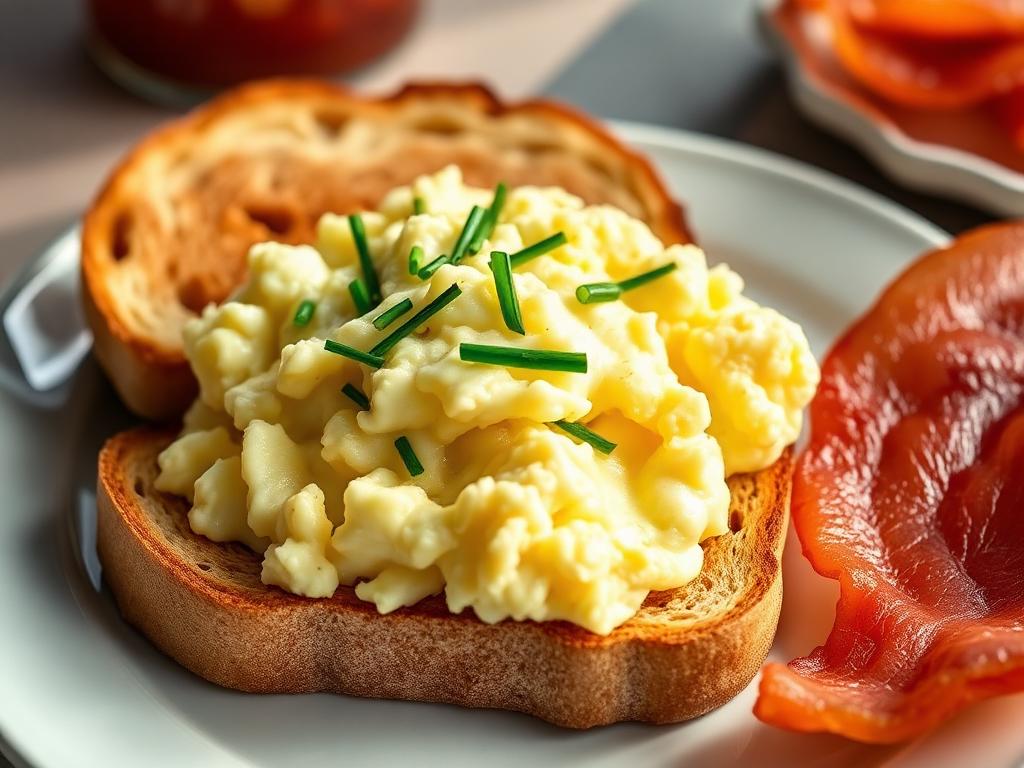
I distinctly remember the first time someone made French-style scrambled eggs for me. I was visiting a friend in Paris who casually mentioned she would make breakfast, and I expected something quick and forgettable. What arrived at the table looked more like a sauce than eggs - pale yellow, impossibly creamy, trembling slightly on the plate. One bite and I realized everything I thought I knew about scrambled eggs was wrong. American scrambled eggs, the kind I grew up eating, are cooked fast over high heat until they form distinct, fluffy curds. They are perfectly fine, honestly, but they exist in a completely different category from what the French call oeufs brouillés. French scrambled eggs are cooked low and slow, stirred constantly over gentle heat until they transform into something resembling soft, warm custard. The technique requires patience that feels almost meditative - you cannot rush these eggs without ruining them. The eggs go into a cold pan with butter, then over the lowest possible heat while you stir continuously in a figure-eight pattern, scraping the bottom and sides of the pan constantly. The curds that form are so small they are almost invisible, creating that silky, sauce-like texture. The whole process takes eight to ten minutes, which feels like an eternity when you are hungry, but the result is worth every second of waiting. I finish mine with a splash of crème fraîche, which stops the cooking and adds a subtle tanginess, plus plenty of fresh chives for color and a gentle onion flavor. These eggs are best served over good toast, where they soak into the bread slightly like a savory custard. Once you experience scrambled eggs this way, the quick version will always feel like a compromise, and breakfast becomes something worth getting excited about again.
Ingredients
Instructions
- 1
Prepare Your Eggs
Crack the eggs into a bowl but don't whisk them yet. French technique calls for breaking up the eggs directly in the pan. Alternatively, you can gently whisk them just until the yolks and whites are barely combined—you don't want them homogeneous. Have all your ingredients ready and within reach, as this technique requires constant attention.
- 2
Start Low and Slow
Place a small saucepan or non-stick pan over the lowest heat setting possible. Add the butter cubes and let them melt slowly. Once melted, pour in the eggs. Using a rubber spatula or wooden spoon, begin stirring constantly, scraping the bottom and sides of the pan in a figure-eight motion.
- 3
The Patience Game
Continue stirring the eggs constantly over low heat. The eggs will gradually form very small, soft curds. This process takes 8-10 minutes—resist the urge to turn up the heat. If the eggs start cooking too quickly at any point, remove the pan from heat entirely while continuing to stir, then return to low heat.
- 4
Finish with Cream
When the eggs have formed soft, creamy curds that are still slightly wetter than you'd ultimately like (they'll continue cooking off the heat), remove the pan from the stove. Immediately stir in the crème fraîche or heavy cream—this stops the cooking and adds luxurious creaminess. Season with salt and white pepper.
- 5
Serve Immediately
Toast the bread until golden. If using bacon, cook it until crispy while the eggs are cooking. Spoon the creamy eggs onto the warm toast, garnish with fresh chives, and serve immediately. These eggs wait for no one—they're best enjoyed the moment they're done, when they're at peak creaminess.
Pro Tips
- 💡Room temperature eggs cook more evenly than cold eggs
- 💡Never stop stirring—constant movement is the key to the creamy texture
- 💡Low heat is essential; high heat creates rubbery, overcooked eggs
- 💡Remove eggs from heat when still slightly underdone; they'll finish cooking off the heat
- 💡White pepper gives a more refined flavor and appearance than black pepper
Nutrition Facts
Per serving (approximate values)
285
Calories
18g
Protein
2g
Carbs
22g
Fat
Recipe Summary
- 1
Rich, creamy French-style scrambled eggs cooked low and slow for a luxurious texture.
- 2
The French technique uses very low heat and constant stirring for small, creamy curds.
- 3
More butter and a touch of cream create an almost custard-like consistency.
- 4
Season at the end — salting too early draws out moisture and makes the eggs watery.
- 5
Serve on toast with fresh herbs for an elegant, simple breakfast that feels special.
Sources & References
This recipe was inspired by and developed with reference to the following trusted culinary resources:
You Might Also Like
Perfect Fluffy Scrambled Eggs on Toast
Avocado Toast with Poached Eggs
Berry Açaí Smoothie Bowl